
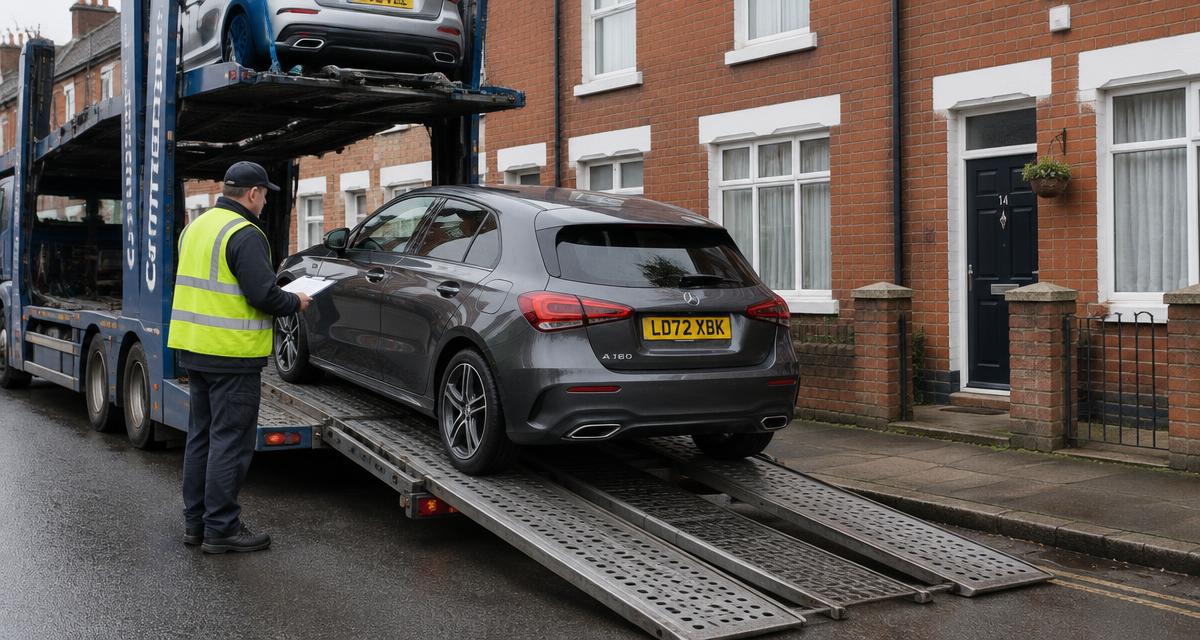
You do not have to drive your car to the port. Here is how door-to-port collection works when you ship a car from the UK.
Quick Answer
A car collection service picks your car up from your home, workplace, dealer or auction yard anywhere in the UK and delivers it to the export port or loading warehouse for shipping. You book collection alongside your shipping, prepare the car and paperwork, and a driver inspects the car, records its condition and loads it onto a transporter. The car is then checked in at the port and loaded on the booked sailing.
Collection is charged separately from sea freight and depends on distance, the type of transport and whether the car runs. Ask for a combined quote so collection and shipping line up with the sailing date.
Why Use a Collection Service?
Driving a car to a port can mean a long round trip, paying for return travel, and waiting at the terminal. If you have already moved abroad, bought a car online or at auction, or the car is not taxed, insured or roadworthy, collection is often the only practical option. It also means the car arrives at the port within the right delivery window before the vessel closes.
Open vs Enclosed Transport
Most cars travel on open multi-car transporters, the kind you see delivering new cars to dealers. This is cost-effective and suitable for everyday cars. Enclosed transport keeps the car out of weather and road debris and is often chosen for classics, prestige and high-value cars. Non-running cars need a transporter with a winch.
Tell us if the car is low, very wide, modified or has a non-standard height, so the right vehicle is sent.
How the Collection Process Works
Step 1: Get a quote for shipping and collection together. Step 2: Confirm the booking, collection address and dates. Step 3: Prepare the car — remove personal items (unless your shipping method allows them), leave a small amount of fuel, and hand over keys and documents as instructed. Step 4: On collection day, the driver inspects the car, notes and photographs any marks, and you both sign the condition report. Step 5: The car is delivered to the port or warehouse and booked in. Step 6: You receive loading confirmation and shipping documents.
Preparing Your Car for Collection
Wash the car so marks are easy to see on the condition report. Take your own dated photos from every angle, including the odometer. Remove toll tags, dash cams set to record, and loose items. Keep fuel to around a quarter tank for RoRo. Make sure the battery is charged and the handbrake works. Disable alarms or explain how to switch them off, and provide spare keys if the port requests them.
Insurance During Collection
Professional transport companies carry goods-in-transit insurance while your car is on their vehicle. Marine insurance covers the sea voyage when purchased. Check what each policy covers and any excess. The condition report signed at collection is the key document if you ever need to claim, which is why taking your own photos is so worthwhile.
Timing Your Collection
Ports have cut-off dates for each sailing. Collection is usually arranged a few days to a week before the port cut-off, depending on distance. Booking early gives the best choice of dates. If you are selling or leaving your home, plan collection before you hand the keys back and check whether parking restrictions or narrow roads affect where the transporter can stop.
We arrange collection from major UK cities including London, Birmingham, Manchester, Leeds, Glasgow, Edinburgh, Bristol, Coventry and Belfast. Request a free quote and include your postcode for an accurate collection price.
Common Collection Problems and How to Avoid Them
The most common problems are simple: the car will not start because the battery is flat, the keys are missing, access is blocked by other cars, or no one is at the address. A charged battery, spare key, clear access and a confirmed contact number solve almost all of them. Tell us in advance about gated sites, height barriers, permit-only parking or narrow lanes, and we will plan a suitable vehicle or meeting point nearby. A failed collection usually means a new date and can mean missing the port cut-off, so a quick check the day before is worthwhile.
Collection from Auctions and Dealers
If you have bought a car from a UK auction such as Copart, BCA or Manheim, or from a dealer, we can collect it directly on your behalf. You will usually need to send us the release note, buyer number or collection authority so the yard hands the car over. Auctions often charge storage after a short free period, so arrange collection as soon as the car is paid for.
For cars bought privately, the seller can hand over the car if you are abroad, as long as the V5C details and payment are complete and the seller agrees to sign the condition report.
What Happens After Delivery to the Port
Once the car arrives at the port or loading warehouse, it is booked in against your shipment and waits for the vessel. For container shipments, it is loaded and secured with straps and wheel chocks, and any permitted goods are packed around it. For RoRo, it is parked in the terminal and driven onto the vessel on loading day. We send you confirmation when it is loaded and share the bill of lading, which you or your agent need to collect the car at destination.
How Much Does Collection Cost?
Collection prices depend on distance from the port, access at your address, and whether the car runs. A car collected close to the loading port costs less than one collected from the far end of the country. Enclosed transport and non-running cars cost more. The easiest way to get an accurate figure is to include your postcode and car details when you request a quote, so we can combine collection and shipping into one price.
Frequently Asked Questions
Can you collect my car from anywhere in the UK?
Does my car need to be taxed for collection?
Can you collect a non-running car?
Do I need to be present at collection?
Ready to Ship Your Vehicle?
Get a free, no-obligation quote for international vehicle shipping from the UK. Check our destinations or use the cost calculator.
Written by
Zahir
SEO & Logistics Expert
Zahir is a seasoned SEO strategist and content writer specializing in international logistics, vehicle shipping, and automotive culture. With over a decade of experience in the shipping industry, he provides expert insights to help customers navigate the complexities of international vehicle transport.