

Marine insurance is the specific type of cover that protects a vehicle during international shipping. Here's how it actually works in practice.
Marine Insurance Is Not Your Car Insurance

One of the most persistent misunderstandings among first-time exporters is assuming their existing UK motor insurance policy will cover a vehicle during international shipping. It won't. Standard motor insurance is designed around road risk, not the specific perils of ocean transit, port handling and multi-week storage, and virtually all UK motor policies explicitly exclude cover once a vehicle leaves the country or is placed into the custody of a carrier for export.
Marine cargo insurance is a distinct product, historically rooted in centuries-old maritime law, specifically designed to cover goods — including vehicles — while in transit by sea. It typically incepts once the vehicle is handed over to the carrier or its agent in the UK and remains in force through loading, the sea voyage, unloading, and often a limited period of storage at the destination port before you collect it.
Institute Cargo Clauses: The Industry Standard
Most marine cargo policies for vehicle shipping are written against the Institute Cargo Clauses (ICC), a standardised set of terms used globally in marine insurance. ICC (A) offers the broadest cover, insuring against all risks of physical loss or damage except for a specific list of exclusions such as inherent vice, wilful misconduct, and war (unless separately extended). ICC (B) and ICC (C) offer progressively narrower cover, listing only named perils such as fire, vessel sinking, or collision, and are less commonly used for vehicle shipping because they leave gaps around ordinary handling damage.
For vehicle shipping specifically, ICC (A) equivalent 'all risks' cover is what we recommend and typically arrange as standard, because it covers the type of damage most commonly seen in practice — scuffs and dents from loading equipment, securing strap marks, and minor weather-related damage on RORO decks — rather than only catastrophic, low-probability events like a vessel sinking.
General Average: An Old Maritime Rule You Should Know
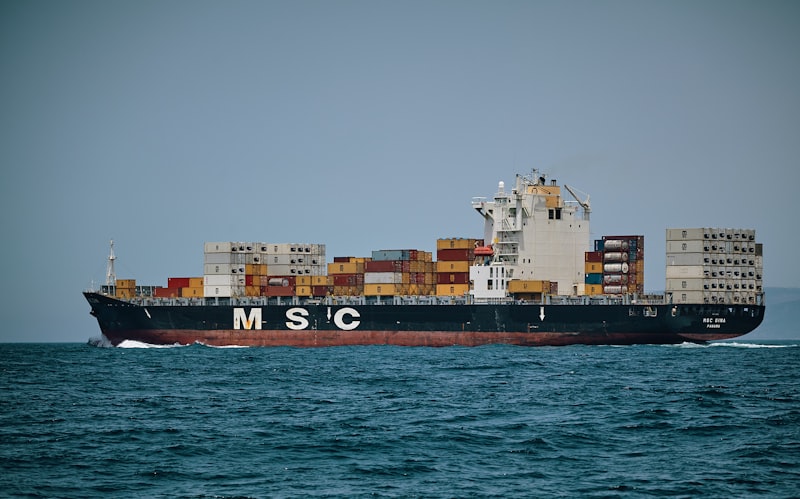
General average is a centuries-old principle of maritime law that can affect any cargo owner, even if their specific vehicle sustains no damage at all. If a vessel encounters an emergency — for example, a fire that requires jettisoning some cargo to save the ship and the remaining cargo — the financial loss is shared proportionally among all cargo owners on that voyage, based on the value of their cargo, not just borne by the owner of the goods that were sacrificed.
This means that even a fully undamaged vehicle can become liable for a general average contribution if such an event occurs on its voyage, and shipping lines are entitled to withhold cargo release until a general average bond or guarantee is provided. Marine cargo insurance specifically covers general average contributions, which is one of the more obscure but genuinely important reasons to carry proper cover rather than assuming 'nothing will happen to my specific car so I don't need it.'
How Claims Actually Work
If damage is discovered on collection, the single most important step is documenting it immediately, ideally on the port or terminal's own release paperwork, and comparing it directly against your pre-shipment condition report photographs. Insurers will want to see clear evidence that the damage occurred during the period of cover — between handover in the UK and collection at destination — rather than pre-existing damage or something that happened after you took possession.
Most marine claims require notification within a specified window, often as short as 3 days from discovery for concealed damage, so prompt action matters considerably. Supporting documents typically include the bill of lading, the pre-shipment condition report, photographs of the damage taken at collection, and a repair estimate from a qualified garage. Straightforward claims for clearly documented transit damage are generally settled within a few weeks once all documentation is submitted, though total loss claims or disputes over pre-existing condition can take longer.
Questions to Ask Before You Buy Cover
Always confirm whether the quoted premium is for 'all risks' (particular average) cover or 'total loss only' — the price difference is often small, but the practical difference in claimable scenarios is significant, since total-loss-only policies won't pay out for the scuffs, dents and minor damage that make up the vast majority of real-world claims. Ask what the excess (deductible) is, since a very low headline premium sometimes comes paired with a high excess that effectively rules out claiming for smaller, more common types of damage.
Confirm the declared value basis and make sure it reflects a realistic replacement cost, and check whether the policy covers general average contributions as standard (it should, under any reputable ICC (A) equivalent policy). Finally, clarify exactly when cover starts and ends — ideally 'warehouse to warehouse' or door-to-door equivalent, covering the vehicle from handover in the UK through to a defined point after arrival at destination, rather than a narrower ocean-voyage-only window that leaves gaps around port storage or inland transport.
Frequently Asked Questions
Does my UK car insurance cover my vehicle during shipping?
What is general average and why does it matter to me?
How quickly do I need to report damage to make a claim?
What's the difference between all risks and total loss only cover?
Ready to Ship Your Vehicle?
Get a free, no-obligation quote for international vehicle shipping from the UK. Check our destinations or use the cost calculator.
Written by
Zahir
SEO & Logistics Expert
Zahir is a seasoned SEO strategist and content writer specializing in international logistics, vehicle shipping, and automotive culture. With over a decade of experience in the shipping industry, he provides expert insights to help customers navigate the complexities of international vehicle transport.