
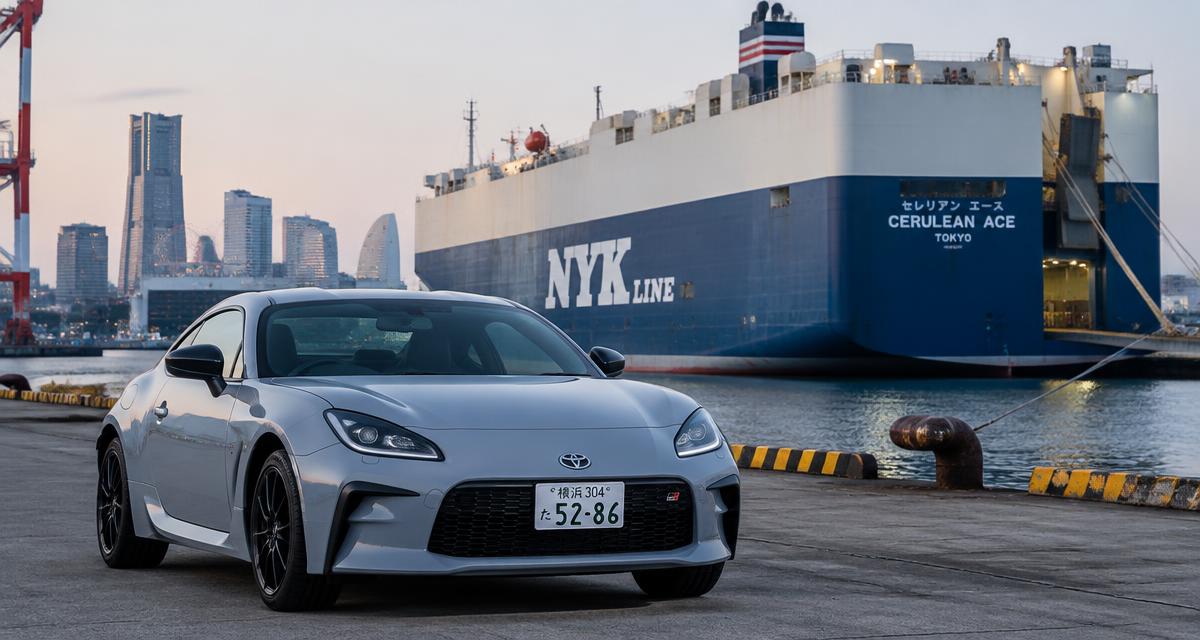
JDM cars are cheaper than ever to buy at auction, but the landed cost in the UK is what counts. Here is every cost, step by step.
Quick Answer
Importing a car from Japan to the UK usually costs the purchase price plus four main groups of charges: Japanese export costs (auction fees, inland transport and export paperwork), sea freight to a UK port, UK import taxes (10% customs duty and 20% VAT, or reduced rates for historic vehicles) and UK registration costs (approval, MOT where needed and DVLA registration).
As a rough planning guide, many buyers find that the total extra cost on top of the auction price lands somewhere between the price of the car itself and double it for everyday models. Sea freight is only one part of that. Always ask for a written quote covering your specific car, port and shipping method before you commit to bidding. The figures in this article are planning estimates and should be checked against a personal quote.
Why Japan Is So Popular with UK Buyers
Japan drives on the left, just like Britain, so Japanese cars are right-hand drive and need no steering conversion. Japanese owners often sell cars early because of the strict and expensive shaken inspection system, which means auctions are full of low-mileage, well-kept cars. Enthusiasts also look for models that were never sold new in the UK: Nissan Skyline GT-R, Toyota Supra, Honda Integra Type R, Mazda RX-7, Toyota Alphard and Estima people carriers, and kei cars such as the Honda Beat or Suzuki Cappuccino.
Auction grading is another reason buyers trust Japan. Each car carries an auction sheet with a grade and a diagram of marks, dents and repairs. Having that sheet translated before you bid is one of the cheapest ways to avoid an expensive surprise.
Cost 1: Buying and Japanese Export Costs
Once you win a car at auction you pay the hammer price plus auction fees and your exporter's fee. The car is then moved from the auction yard to the port, de-registered from the Japanese system and issued an export certificate. The export certificate is essential: it is the document the UK uses to confirm the car's history, first registration date and ownership.
Ask your exporter for a single written figure that covers the car, fees, inland transport, export certificate and loading, sometimes called FOB (free on board). That makes it much easier to compare offers from different exporters.
Cost 2: Sea Freight from Japan to the UK
Cars from Japan normally travel by RoRo (roll-on roll-off) vessel or in a shared or sole-use container. RoRo is usually the lower-cost option for running cars; containers suit high-value, modified or non-running cars, and let you ship spare parts with the car. Main loading ports include Yokohama, Nagoya, Kobe and Osaka, and common UK arrival ports include Southampton, Portsmouth and Bristol.
Transit time is typically around six to eight weeks at sea, plus time waiting for a sailing and for customs clearance. Check whether your quote includes UK port handling and terminal charges — these are often listed separately and can catch people out.
Cost 3: UK Import Duty and VAT
Most cars imported from Japan into the UK pay 10% customs duty and then 20% import VAT. The duty is calculated on the car's value plus the cost of shipping and insurance to the UK. VAT is then calculated on the total of value, shipping, insurance and duty. That is why taxes grow quickly on more expensive cars.
Vehicles over 30 years old, in original condition and of historical interest may qualify as historic vehicles, with 0% duty and 5% VAT. The rules are specific, so confirm eligibility with HMRC or your customs agent before you rely on the lower rate. You will also need to declare the import on the correct HMRC system before the car can be released.
Cost 4: Approval, Testing and Registration
Cars under 10 years old normally need to pass an approval test such as IVA (Individual Vehicle Approval) before registration. Common changes include fitting a speedometer showing miles per hour, adjusting headlamps, and adding a rear fog light. Cars over 10 years old usually need an MOT instead. Many buyers use a specialist import agent to prepare the car, book tests and submit the DVLA registration application.
Once registered, you receive a UK number plate and V5C logbook. Only then can the car be taxed, insured on its UK registration and driven normally.
Worked Example: How the Numbers Stack Up
Imagine you buy a 2018 Toyota at auction and your exporter's all-in FOB figure is equivalent to £8,000. Sea freight and insurance to the UK add, say, £1,500, bringing the customs value to £9,500. Duty at 10% is £950. VAT at 20% on £10,450 is £2,090. Port handling, customs agent and delivery might add several hundred pounds more, and IVA preparation, testing and DVLA registration add more again.
In that example, the car that cost £8,000 in Japan ends up well above £13,000 before it is on the road. These numbers are illustrations only, not a quote, but they show why you should always work out the landed cost first and then decide your maximum bid.
How to Keep Costs Down
Choose a reputable exporter with transparent fees, compare RoRo and shared container options, avoid cars that need lots of changes to pass approval, and budget for storage in case of delays. Make sure every document matches — chassis number, first registration date and owner details — because mismatches are one of the biggest causes of port delays.
If you plan to ship the car back out of the UK later, or you are also moving abroad, we can help with UK exports to more than 100 countries. Use our cost calculator to check published rates or request a free quote.
Documents You Need for a Japanese Import
Keep the Japanese export certificate (and an English translation), the auction sheet, the purchase invoice, the bill of lading from the shipping line, and your ID and proof of UK address. Your customs agent uses these for the HMRC import declaration, and DVLA asks for proof of age and identity when you register the car. If any document is missing, registration can stall for weeks, so ask your exporter to send scans as soon as the car is loaded.
Frequently Asked Questions
How long does it take to ship a car from Japan to the UK?
Do I pay import duty on a car from Japan?
Is RoRo or container cheaper from Japan?
Do Japanese cars need IVA in the UK?
Ready to Ship Your Vehicle?
Get a free, no-obligation quote for international vehicle shipping from the UK. Check our destinations or use the cost calculator.
Written by
Zahir
SEO & Logistics Expert
Zahir is a seasoned SEO strategist and content writer specializing in international logistics, vehicle shipping, and automotive culture. With over a decade of experience in the shipping industry, he provides expert insights to help customers navigate the complexities of international vehicle transport.